
Discover Magazine. Science, Technology and The Future
Subscribe Today »
  • Renew
  • Give a Gift
  • Archives
  • Customer Service
  • Facebook
  • Twitter
  • Newsletter
  • Health & Medicine
  • Mind & Brain
  • Technology
  • Space
  • Human Origins
  • Living World
  • Environment
  • Physics & Math
  • Video
  • Photos
  • Podcast
  • RSS

Galleries / 11 Space Missions That Will Make Headlines in 2011

The browser you are currently using does not support Discover's photo galleries. Supported browsers include recent versions of Mozilla Firefox, Microsoft Internet Explorer (version 7 or later), Google Chrome, and Apple Safari.

If you have any questions or feedback, please email webmaster@discovermagazine.com. Thank you for reading Discover, and we apologize for the inconvenience.

Colin Schultz; published January 6, 2011

Going for Glory

The Next-Gen Mars Rover

Destination: Asteroid Belt

When One Comet Mission Isn't Enough

Mercury: Get Ready for Your Close-Up

Staring at the Sun

The Quest for an Earth-Like World

Entering the Commercial Space Age

Space for Tourists

Space Shuttle, Goodnight

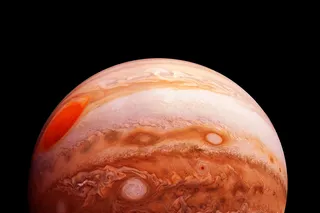
It's usually impossible to predict science headlines for the year ahead: Small labs could come out of nowhere with amazing discoveries, long-expected findings might fail to materialize, and "settled science" may be thrown into turmoil. But one field--maybe more than any other--gives us strong hints on what to expect. Thanks to heavy legislation, complicated engineering, and astronomical distances travelled, we can see into the future of space exploration with some confidence. <br /><br /><strong>A JAUNT TOWARD JUPITER</strong><br /><br />Kicking off our list of space missions that are likely to make headlines in 2011 are three journeys that are just getting started. The first is the launch of NASA's <a href="http://www.nasa.gov/mission_pages/juno/main/index.html" target="_blank">Juno orbiter</a>, scheduled to head toward Jupiter in August. Juno will study the gas giant's atmosphere and search for evidence of a solid core to provide insight into Jupiter's formation and structure; by extension, it will also give us a more complete picture of how massive planets may form in other solar systems. Juno will fly for five years and drop into orbit in July 2016.
Another important mission, blasting off in late February, will help resolve some of the <a href="http://climate.nasa.gov/uncertainties/" target="_blank">biggest uncertainties</a> in our understanding of climate change. NASA's <a href="http://www.nasa.gov/mission_pages/Glory/overview/index.html" target="_blank">Glory satellite</a> will add to over thirty years of high-precision measurements of solar energy output, and will help keep track of any small changes in <a href="http://www.nasa.gov/mission_pages/Glory/solar_irradiance/total_solar_irradiance.html" target="_blank">solar irradiance</a>. Glory will also try to sort out how <a href="http://www.nasa.gov/mission_pages/Glory/about/index.html" target="_blank">aerosols</a>, floating particles in the atmosphere that absorb and reflect energy, affect the Earth's energy budget. Clearing up these uncertainties will be invaluable for accurately predicting the fate of our warming world.
The new year will also see the liftoff of the biggest, heaviest, and most equipment-laden Mars rover yet. The <a href="http://www.nasa.gov/mission_pages/msl/index.html" target="_blank">Mars Science Laboratory</a>, otherwise known as Curiosity, will act as a rolling geologist, careening across the surface at a brisk 200 yards per day before stopping to take rock samples and conduct on-board chemical analyses. The rover's goal: to find out whether Mars was ever hospitable for microbial life.<br /><br />Curiosity isn't expected to launch until late in the year, but if you're *ahem* curious, or if you just can't wait that long, there is <a href="http://mars.jpl.nasa.gov/msl/mission/whereistherovernow/" target="_blank">a webcam</a> that allows you to watch the rover's construction and testing.
While watching a rocket launch is plenty of fun, 2011 will also see a number of missions finally arrive at their destinations. July will mark the end of <a href="http://www.nasa.gov/mission_pages/dawn/main/index.html" target="_blank">Dawn</a>'s four-year journey to the asteroid belt which cuts between the orbits of Mars and Jupiter. Dawn will investigate the icy dwarf planet <a href="http://www.nasa.gov/mission_pages/dawn/ceresvesta/index.html" target="_blank">Ceres</a> and the rocky asteroid <a href="http://www.nasa.gov/mission_pages/dawn/ceresvesta/index.html" target="_blank">4 Vesta</a> to help researchers better understand conditions during the original formation of the solar system. This Hubble image of Ceres is one of the best we have, so you can see why researchers want to take a closer look.
In a bold example of astronomical recycling, NASA decided to give the <a href="http://www.nasa.gov/mission_pages/stardust/main/index.html" target="_blank">Stardust</a> probe a new purpose in life. Stardust gained its fame for capturing material from the tail of the comet <a href="http://en.wikipedia.org/wiki/81P/Wild" target="_blank">Wild 2</a> back in 2004 and dropping its sample capsule to Earth in 2006. But the probe itself remained in space, and in February its detectors will be turned toward a new target.<br /><br />The new subject, the <a href="http://en.wikipedia.org/wiki/Tempel_1" target="_blank">comet Tempel 1</a> (pictured), was itself part of a previous investigation. In 2005, the <a href="http://www.nasa.gov/mission_pages/deepimpact/main/index.html" target="_blank">Deep Impact</a> mission set out to characterize the inside of the comet by smashing into it with an 800-pound chunk of copper. Stardust will give us an important, and cheap, second look at the crater formed by Deep Impact when it flies by Tempel 1. This will be particularly useful because the hit by Deep Impact tossed up a cloud of dust that prevented that spacecraft from getting a good look at the damage.
Unlike Juno, which will take the first steps into its life as a planet inspector in 2011, the Mercury orbiter <a href="http://www.nasa.gov/mission_pages/messenger/main/index.html" target="_blank">Messenger</a> is reaching the climax of its career. <a href="http://messenger.jhuapl.edu/why_mercury/index.html" target="_blank">Mercury</a> is small, dense, hot, and relatively unexplored--and on March 18 Messenger will drop into orbit around the planet for a year-long investigation. Messenger has already completed three fly-bys of our solar system's innermost planet, taking high resolution images of the planet and identifying areas of interest. Once in orbit, Messenger will map the planet's the magnetic field and topography, characterize its atmosphere, and search for ice at the permanently shaded polar regions.
A satellite doesn't have to be brand new to count among the best and brightest of 2011. In fact, it's hard to think of a mission brighter than the <a href="http://www.nasa.gov/mission_pages/sdo/main/index.html" target="_blank">Solar Dynamics Observatory</a>. Marking its one-year anniversary on February 11, <a href="http://sdo.gsfc.nasa.gov/" target="_blank">SDO</a> is helping us understand the magnetic tempest that is our sun. SDO provides a close look at sunspots, as well as the massive solar eruptions that lie at the heart of some silly civilization-destroying <a href="http://www.the2012theories.com/solarstorm.html" target="_blank">apocalypse scenarios</a>. Researchers are hoping to unlock the secrets of the sun's <a href="http://en.wikipedia.org/wiki/Solar_cycle" target="_blank">11-year activity cycle</a>, and sort out clues that might give advanced warning of solar activity like flares and <a href="http://helios.gsfc.nasa.gov/cme.html" target="_blank">coronal mass ejections</a>.
Another ongoing mission that's likely to have a big year is the <a href="http://www.nasa.gov/mission_pages/kepler/main/index.html" target="_blank">Kepler telescope</a>, which is busy hunting for Earth-sized exoplanets (planets outside our solar system). Kepler tries to spot distant planets by watching for a <a href="http://kepler.nasa.gov/Mission/QuickGuide/faq/#a1" target="_blank">dip in a star's light</a> as a planet passes in front of it, and it has been very successful since it was first switched on in April 2009. Kepler researchers have already announced the discovery of <a href="http://kepler.nasa.gov/Mission/discoveries/" target="_blank">eight exoplanets</a> and have identified more than 700 hopefuls. But last June <a href="http://blogs.discovermagazine.com/80beats/2010/06/16/astronomers-find-a-bevy-of-exoplanets-wont-discuss-most-interesting-ones/" target="_blank">Kepler scientists declared</a> that they wouldn't be releasing information on the most exciting planet candidates until they'd thoroughly checked them out. The date they announced for the revelation of the hoarded data: February 2011.
After making headlines in December with the <a href="http://blogs.discovermagazine.com/80beats/2010/12/08/spacex-blasts-its-dragon-space-capsule-into-orbit/" target="_blank">successful test launch</a> of its Dragon capsule, <a href="http://www.spacex.com/index.php" target="_blank">SpaceX</a> may represent the biggest space story of 2011--the continuing privatization of space flight. The new year will see the completion of testing for the <a href="http://www.spacex.com/dragon.php" target="_blank">Dragon capsule</a>, which is intended to carry cargo or crew to the International Space Station, and the large Falcon 9 rocket. SpaceX's <a href="http://www.spacex.com/launch_manifest.php" target="_blank">first paid mission</a> for the Falcon 9 will be to deliver <a href="http://www.asc-csa.gc.ca/eng/satellites/cassiope.asp" target="_blank">CASSIOPE</a>, a research and communications satellite, into orbit. Soon after, the Falcon 9/Dragon combo will start running supply delivery missions to the International Space Station.
Not to be wholly outdone, <a href="http://www.virgingalactic.com/" target="_blank">Virgin Galactic</a>'s suborbital spaceship-for-tourists<a href="http://www.virgingalactic.com/overview/spaceships/" target="_blank"></a>, seen here being carried by its mothership WhiteKnightTwo, is expected to finish testing over the course of the year. The two-vehicle package will take off from a runway at <a href="http://www.spaceportamerica.com/" target="_blank">Spaceport America</a> and climb to an altitude of about 50,000 feet. The mothership will then release <a href="http://www.virgingalactic.com/overview/spaceships/" target="_blank">SpaceShipTwo</a>, and the ship's engines will kick in to send it throttling into space. The launch sequence is <a href="http://www.youtube.com/watch?v=VBnkbeGLGk4#t=2m26s" target="_blank">reminiscent of the X-15</a>, the first winged aircraft to achieve sub-orbital flight. <br /><br />A ticket will set you back $200,000 (but the company only requires a $20,000 deposit). Virgin Galactic refuses to set a date for when it will begin flying its paying customers to the edge of space, but <a href="http://www.newscientist.com/article/mg20827924.100-2011-preview-private-space-flight-takes-off.html" target="_blank">some are hoping</a> to see flights start as early as the end of 2011.<br /><br />In addition to what it means symbolically, the rise of private spaceflight will be particularly important, because...
This year will see the retirement of the Space Shuttle. The shuttle <em><a href="http://www.nasa.gov/centers/kennedy/shuttleoperations/orbiters/orbitersend.html" target="_blank">Endeavour</a></em> is scheduled to blast off from the Kennedy Space Center on April 1 for the program's final official mission, <a href="http://www.nasa.gov/mission_pages/shuttle/shuttlemissions/sts134/index.html" target="_blank">STS-134</a>. Even if NASA decides to add one more flight--STS-135, which is currently <a href="http://www.nasawatch.com/archives/2010/12/nasa-presses-ah.html" target="_blank">caught in fiscal limbo</a>--2011 will cap off 30 years of the Shuttle program, which began with <a href="http://www.nasa.gov/mission_pages/shuttle/sts1/index.html" target="_blank">STS-1</a> and the liftoff of space shuttle <em>Columbia</em> on April 12, 1981. It's been quite a ride.

More Galleries

The 100 Top Science Stories of 2010

Every year DISCOVER sorts through the scientific accomplishments of the past 12 months, and assembles a list of the coolest experiments, most brilliant discoveries, and most world-changing events. As you page through the countdown to the #1 science story, we think you'll come to the same conclusion we did: 2010 was quite a year.

The Freakiest Places in the Solar System

The stinkiest moon, the deepest canyon, the most shocking lightning storm: A guided tour to the solar system's most extraordinary spots.

Space Junk: How to Clean Up the Space Age's Mess

Didn't anyone tell space agencies to pick up their toys when they're finished playing? Now scientists have to invent new ways to undo decades of dumping in orbit.

Gallery Tools
DiggDigg
Stumble UponStumbleUpon
RedditReddit
 
Del.icio.usDel.icio.us
FacebookFacebook EmailEmail  
HelpHelp RssRSS
Increase - Decrease Font SizeIncrease - Decrease Font SizeIncrease - Decrease Font Size Font
Kalmbach Publishing Co.

Copyright © 2012, Kalmbach Publishing Co.

Privacy - Terms - Customer Service - Subscribe Today - Advertise - About Us